In the Beginning...

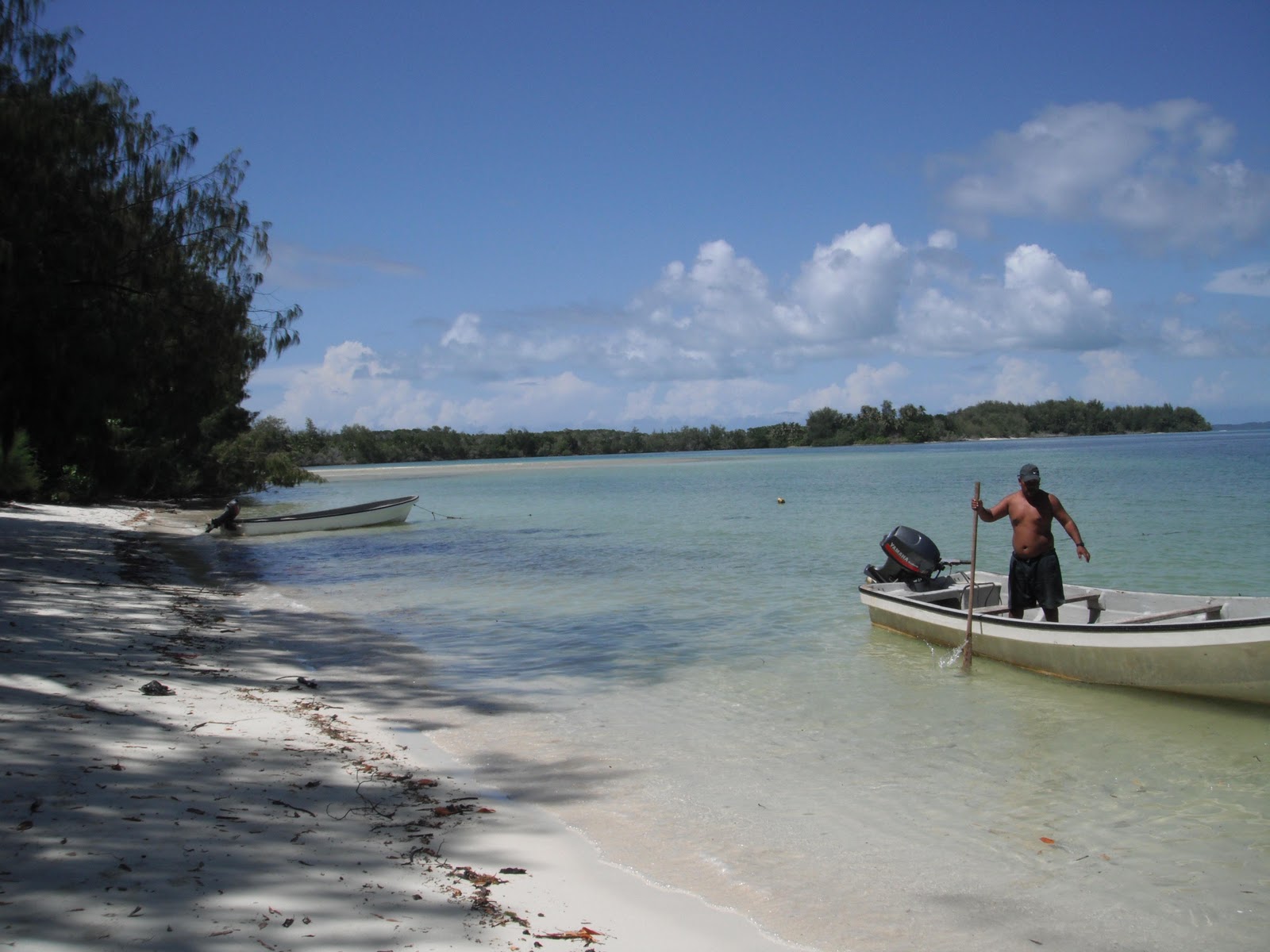
On Februray 24th, 2011 at 6am I departed Auckland Airport bound for the Solomon Islands to do 10 months of volunteer work alongside two NGOs (who shall not be named here just in case I get my butt kicked for slagging them off). I had been tasked with helping to organise a waste management system (including sewage and rubbish disposal) and to help out with the local marine reserves. I was be based in Kia Village, a small, sea-side village with no roads and no electricity.


Here’s the low down on my trip. Enjoy.

Sunday 17th: Zaguto Village Meeting

Today I headed back out to Zaguto with an idea in mind that I would help put together a plan for dealing with their waste management problems (ie. no toilets and no organised rubbish disposal). As it turned out when I arrived at the meeting house, they were all sat down and I was invited to instruct the locals as to how to solve their waste management problems. I think they expected a lecture on the proper way to live.
I managed to turn this around, threw a few broad options at them and suggested that they decide what they wanted me to do. After, at first, seeming slightly confused that I, ‘the expert’, was not going to solve the problem for them, it was remarkable how quickly they nutted out a solution.
Within an hour of discussion it was settled that they would dig one mini-landfill per house and they would build composting pit toilets to share between houses. All I was needed for was to provide some ideas on how to build a composting toilet.
We decided that between us we had the skills to put together a compost toilet out of local materials and at minimal cost, and that it would be best for me to help them build one for the church so that they could all see it (and hopefully not smell it) in action. And so it was settled that I would come back after Easter and begin construction with the help of the boys.
The meeting was concluded with a ‘sing-sing’ and it was finally looking hopeful that we might achieve something. I was stoked that I was finally getting somewhere with work. I am however, conscious that my expertise as a toilet engineer may have been somewhat overestimated. Luckily however, among the local lads is at least one builder so I think we’ll pull through eventually.
Bloody turtle shells on the beach at Zaguto.
Sanitation is not the only environmental challenge.

April12th: Zaguto Reconnaissance Mission


This morning JP picked me up in the boat and took me to back to Zaguto to check out the vibe and have some yarns. He was only 20 minutes late and I had to scramble to get ready. Upon arrival I was given the grand tour of the village by one of the senior ladies and an ever-multiplying group of local kids.
Like Kia, Zaguto is a wide village, spread along the coast in a ribbon of leaf houses built on stilts above the sea. On the whole, the outlook for Zaguto looks rather more positive than for that of Kia. They have a communal area for meetings, a fairly cooperative system of leadership and the Chief and the village “cheer lady” seem to be strongly opposed to logging and so are pursuing tourism as a more sustainable alternative. They seem to have the capability to do so too, as several of the ladies work at a nearby surf camp over summer when surf seasons cranks up, so there is a general knowledge within the community of how to organise a tourism operation. That they are reasonably well organised gives me hope that they may actually be able to stave-off logging here and spend some of their money on things like toilets rather than SolBrew.
And that is about where I come in. My mission here (which has become my primary work objective for the moment) is to help them to use their limited resources to do something that will make an enduring difference in their lives. Given their aspiration to attract tourists (and to generally improve their lot) they are pretty keen to use me to help improve their waste management and sanitation situations, as was to be my focus in Kia. With this in mind, it has been settled that I am to come back at the end of the week to talk through a few ideas, for a “story” and a “sing-sing”.


April 1st: A short novel on logging and globalisation

I was getting claustrophobic at the house and I decided to go for a paddle to the logging camp a few kms out towards the open sea. Logging has been a hot topic in the Kia community because, other than selling fish to the local fisheries outpost, it is the only real income source for the locals, especially while the tourism industry is stalling on the launch-pad and the global economy is seriously faltering.
At the base there was a fuel depot, a little mill for selling wood to the local community, and hundreds of huge logs waiting for a ship. I chatted with the men at the fuel depot when I arrived. They weren’t thrilled to be working here but it was the only work that they could get other than fishing (which requires a boat with an outboard now that the reefs close to Kia have been largely cleaned out).
They said it was no worries that I went walkabout so I wandered off up the road. I was accompanied by Mikey, a twenty year old from the provincial capital. His story was straight from the much-advertised fairytale of globalisation. He was working here just for the year so that he could raise money to go to business school next year in Honiara (ie. “primary industry helps people to get a foothold on development, to contribute to the economy and thus, distribute the benefits of economic growth throughout the population via economic trickle down”).
1km up the road, past hundreds upon hundreds of massive hard-wood logs, we arrived at the logging camp. I was immediately offered a seat and so I sat down and within minutes was scratching into the dirt a diagram of a composting toilet – one potential solution to the local waste management problems.
One of the men was particularly interested and I got talking to him about life, art, tea and logging. His opinion on this last subject was overwhelmingly negative; the wages were poor, there were no opportunities for promotion and it was depressing to see the land being brutally stripped bare. But what other work was there? If they wanted money and a place in the globalising world, with all its promises of big outboard motors and leather boots, they would have to work.
This man, turned out to be Mikey’s uncle and the landowner who had sold the logging rights to the Malaysian logging company for whom he now worked. Having taken the money for the logging rights (a pittance that would barely make a dent in the profits to be made from his land) and spread this money throughout his family as is customary here, he would have had enough to buy himself a boat, an outboard motor, and a few hard nights drinking SolBrew before the money ran out.
Although there is no reliable information on the sustainability of logging in the Solomons, it is fairly clear that, with the lack of viable alternative income sources, the log-able timber resources will be all but exhausted within a decade or two. The same can be said of the fisheries if not the mineral deposits which are only just starting to be cleaned out.
It would be nice to say that the timber will be made into outdoor furniture and sold to us in New Zealand, and that by not purchasing these products we can slow the demand for the plunder of the forests over here. Frankly though, the logs at the camp were waiting for a boat that would take them to either Korea or China and most of the timber would probably be sold as building materials in these rapidly growing economies. It is therefore, probably far too late for you or I to make a difference the check-out at Mitre 10.
It is worth noting though, that via RAMSI (the Regional Assistance Mission to the Solomon Islands), and using NZ taxpayer coin, our government is seeking to secure the philosophy of corporate-led economic development in the Solomons. Indeed, corporate-led economic development is the major focus of NZ foreign affairs and the prevalence of the logging industry is largely a symptom of this philosophy.
From this perspective it doesn’t look hopeful for the Solomons, but I would hate to leave you feeling depressed about the state of the world. The directors of RAMSI would remind us that there is hope to be found in the political leadership of the Solomon Islands. There has been an outpouring of support from the international community into the legal system, and customary land-tenure is gradually being institutionalised. However, on the subject of political leadership, I read in the paper last week that the MP for Malaita has been allowed back into parliament after serving a two year sentence for executing a man in his hospital bed. Even now, this MP is still embroiled in a corruption scandal. So as much as I don’t like to be the bearer of bad news, I wouldn’t get your hopes up.


Speaking of global, global warming and sea-level rise
are very real here. The Arnavons conservation centre
at hight tide.

March 27th: The beginning is in sight

Time is still slipping away and it doesn’t look remotely likely that I will start work in the Kia community during the next month. I am waiting to be heard by the local house of chiefs so that they can confirm my objectives and I can start work. Unfortunately though, being as it is that there are 10 chiefs here in Kia (or more, depending on who you ask) getting any changes approved formally is a complicated process, especially if a foreigner is involved. So my work in Kia is still stalling on the launch-pad.
In light of this, I’m selling my services more widely around the area. This evening, myself and Gary, accompanied by our ‘boss’, JP, went to a small village called Zaguto just out of the Kia lagoon and, as JP has arranged, my service were offered to the village.
They were nice people and the village was rather more appealing than Kia with nice gardens and a central communal area, two things that Kia lacks. I introduced myself to them all (which would have been a nerve-racking experience even if it were done in English) and I think I was pretty well-received. They were all keen to share stories with a foreigner and were pretty excited that I was happy to help out in their little village, and to be honest, after such a long period of waiting, I was pretty excited too.

Thursday March 24th: Excess Down-time

It’s been nearly a week now since I arrived in Kia and exactly one month since I arrived in the country and, while I am settling into the ultra-slow pace of life here, I’m not super stoked about it. I spent much of my first few days sitting around the house, relaxing. It has been an excellent holiday. The only trouble is that I didn’t come here for a holiday. The distant sounds of chainsaws from the logging camps have been a constant reminder that there’s a lot more to be done here than relaxing and catching fish.
I’m now on Kerhikapa Island at the conservation centre for the Arnavons Community Managed Conservation Area, hence I have internet. My time here has been spent hanging out with the conservation officers (three guys from the three different villages with an ownership claim over the Arnavons), going on turtle watch (but not actually spotting any turtles), and patrolling for poachers (which involves a lot of fishing). 
I’m getting slightly anxious as the days go by, that I might not have time to achieve anything with this slow pace if I don’t at least make a start sometime soon. After one month I still haven’t been introduced to the House of Chiefs or the church leaders, and as these are the people who will eventually decide what I will do with my time here, I’ve not even defined my work objectives properly. I was always aware that the Solomons works on “Island Time” and so nothing gets done in a hurry, but I’m also rather aware that my potential to be of help here is eroding away by the day.  
To make matters worse, the Sasakolo Conservation Area is in the process of being disbanded. Sasakolo was the basis for half of my assignment; half of my purpose for coming over here. The issue at the moment is that there has been an ongoing dispute over land tenure at Sasakolo for several years. The occupier of the land was the one who initiated the conservation project here by opening the door for TNC to establish a conservation centre. The problem being that another chief nearby claims the land as his own on the basis that his family had planted coconuts there some years ago without dispute from any other landholder. He believes that the land is therefore, rightfully his. Petty though it seems, the case is bound for the land court via a waiting-list of five years or so, time I that don’t have.
Three of us are heading back to Kia tomorrow and will go to Sasakolo on Saturday to bring back some of the gear that TNC owns. After that I’m expecting to have to wait for a couple of weeks until the Arnavons management committee meets and discusses my role here before I can start to do any work in the community. In the mean time I guess I’ll just have to occupy myself by relaxing and going fishing... Oh well.

Friday March 18th: Arrival... Finally.

Finally the time came to leave Honiara, but only after three hours of waiting at the airport. Our plane had broken down so we were put on another flight that was diverted to drop us off.
Flying over Isabel we could see the impact of the logging here. Miles and miles of roads to nowhere wove through the catchments of streams that spewed red-brown mud into otherwise picturesque lagoons and we saw the odd ship stacked with logs ready to go to the mills in Malaysia. They served as a reminder of who would benefit from this industry, or more poignantly, who would not benefit; those who depended on dying reefs for food.
We landed on the paddock at Suavanao. It had received a new layer of sand with the tsunami last week. Dixon, a conservation officer from the Arnavon Islands, and his nephew picked us up in a 20ft, open hull boat and we were on our way to Kia, cruising between reefs and over Pacific swells.
We arrived at Kia and I was quickly introduced to all the lads at John’s shop, and we were, just as quickly, away again to Putua, a small island of which Gary and I were the only human inhabitants. Unfortunately though, our outboard spluttered to a halt on the way so we were to be without transport for a while. I’ll let the photo’s tell the story from here.
Chateau de Putua.

Sunrise over Kia.

Strong fish. Note the bent spear.


Thursday March 17th: pre-redeparture

I’m finally leaving Honiara tomorrow and I’m looking forward to getting away from the rubbish. My flatmate, Gary and I will fly into a place called Suavano on Northern Isabel. Suavano consists of a paddock... that’s all. One of the local boys from Kia will hopefully pick us up from there and take us an hour up the coast by boat, into the lagoon and to Kia.
Gary is a little apprehensive as to what we’ll find when we get to the house. At high tide the floor boards sit about six inches above the water and with the tsunami, the place might be a little wet.
Once there we have a bit of an orientation planned including such dreadful things as spear-fishing for tuna and checking out the surf breaks (weather dependant). My next blog will be from the Arnavon Islands Community Marine Conservation Area where I’ll be slaving away, swimming with the turtles. Island life is so hard.

Saturday 5th March

This morning, I did some more research at the office before heading out the back to the beach with my spear-gun to have a go at some of the travelly that I saw earlier in the week. On the way down I was stopped by a big Auzzie guy who warned me to “think twice about that, the sewage outfall's just on the other side of those rocks”. After having thought twice I concluded that it was much the same as spearing around Dunedin, only here there was probably more sewage coming out of the streams nearby than the sewage pipe.
Once I’d retired with no fish to be seen, I skulled a can of Coke. Word on the street has it that Coke’s the bee’s knees when it comes to disinfecting ones stomach so no guts ache for me.
This evening I went back to see the guitar playing locals who I met last weekend to see if they were playing in town anywhere tonight. It turned out they’d had a busy week. They’d gone to the SolBrew brewery and played them the little jingle that they played me last weekend. They were immediately offered a recording contract for a radio ad – it was their lucky break! With all the attention though, they were knackered and weren’t playing in town tonight so I congratulated them and left them to their well-deserved SolBrew.

Thursday March 3rd

I got up early and, once the rain stopped and the thunder died away, I embarked on a mission up the river beside town to find the much-talked-about waterfall. At the bottom of the canyon I came to the village of the local customary land-holders. After paying a custom fee of SI$60 (about NZ$12), one of the local boys, Kaspa, led me off up the hill.

T’was a treacherous climb. The path wove between old fox-holes left from the Japanese in WWII and was dotted with the occasional snake. Once over the ridge we descended through dense, slippery rainforest into a limestone canyon and were greeted at the bottom by the thundering of a series of waterfalls. It was a pretty remarkable scene. The water tumbled in a series of drops, off a high mound and down into a deep canyon full of tree trunks, much like any tight river gorge on the NZ’s West Coast.
Kaspa and I climbed and swam up around the waterfalls and checked out the caves at the top, during which time I had a bit of a chance to yarn to him about his life and work. It was my first real encounter with the type of community-run tourism that I am to work with for the rest of the year. He said that he thought he was about thirty years old and he had just finished schooling and mechanical apprenticeship last year. While looking for work since November, he had spent his time looking after his parents, nephews and nieces, and taking tourists to the waterfall. It was his only source of income as his family couldn’t farm their land since it had been sprayed by the Allied Forces to remove the forest cover in WWII and for the most part, nothing but a tough, persistent grass had been able to grow there since. He hoped that his brother would come back from Brisbane when he finished his engineering degree so that he could help to support the family. This however, seemed unlikely as work for any local professional is hard to come by in the Solomons.
It seemed odd to me that work was so hard to come by, especially given that there was sufficient money floating about to entice swarms of Aussies working in the mining industry and dozens of Korean fishing boats into the country as well as extensive logging operations in the provinces. As it turns out though, those people are mostly working for foreign companies on contracts that aren’t particularly accessible to the locals. So for Kaspa, tourism was the only lifeline for himself and his family.
This reminded me of my upcoming work in Kia and gave me a fresh perspective on why this kind of work is so important. The people with whom I’m working aren’t looking for an extra dollar for some nice shoes or a new car, they’re happy to settle for rice. Kaspa was worried though (and I share his uncertainty), that the kind of economic growth that he could see in the Solomons wasn’t actually worthwhile for him and his people. The kind of economic growth that the Solomons has at the moment does nothing of the sort for the vast majority of its people (though perhaps the Malaysian logging crews, Korean tuna fishers and Australian gold miners are a bit better off).
What Kaspa hoped for was the chance for his people to make their own development so that they could begin to see some of the benefits of the developed world – they could go to a doctor when they were sick and his nephews and nieces could go to school. I can see ways to pursue this kind of development which leaves local communities in a better position to cope with future challenges. With a bit of luck this might be possible for some of the people who I’m over here to help. For most people here though, economic development only means more sucking dry of the country's resources and more corruption by its politicians.

Sunday 27th Feb

I dragged myself out of bed 5.30am for the flight to Santa Isabel Island and eventually, via a two hour boat ride, to Kia, my soon-to-be home base. Even before the sun came up I was sweating in the humid warmth. After helping some guys push their truck out of a boggy puddle on the driveway and picking up another volunteer on the way, we arrived at the airport to find the flight cancelled. Iu on ailen taim nao wait boi.
Having no pressing matters to attend to (as seems to be a common issue for many Solomon Islanders) I decided to mount a mission to a ship wreck about 15kms down the road for some snorkelling. So I set out with a vague idea of where I was going and whole day to work with. Lucky for me the locals seem just to enjoy helping people out and after a few mish-mash conversations of English and Solomon Pijin a couple of young guys took me to a bus stop and told me which one to catch.
The bus took me just beyond the edge of town, so with no shortage of time I walked... and ran, and walked, and ran, and sweated, and bought a coconut from some old ladies on the road-side. They reckoned I had about 6kms to go – a long way in the tropical sun – but “no wari,” a couple of the boys were going that way and they’d drop me off. So I jumped in the car with a couple of 14 year old lads and a 4 year old little bro and hooned off in uncles taxi trailing a cloud of black smoke behind us. They waved to all the kids we passed on the road-side, all of whom howled with laughter – apparently I was a rare novelty.
I gave them some chocolate bars as thanks when they dropped me off and they were hapi tumas for mitim mi. After that it seemed unusual to pay SI$10 to walk out onto the beach full of overweight, sun-burnt Aussies, none of whom said hi or even offered to sell me a coconut. But to their credit, when I asked nicely, they allowed me to sit on the back of their truck for a ride back to Honiara afterwards – a triple score as I didn’t have to walk, stayed cool, and didn’t have listen to their bad accents. Cheers Aussies, you’re alright ay.
Later on (mid afternoon) the priest who runs the Chester Rest Haus where I’m staying, invited me to the local pub. Apparently I was the second white guy to ever go there and the boys were stoked to have me. They celebrated by attempting to get me drunk and beating me respectfully at pool. Luckily for me, my extra-curricular education at Otago University has provided me with some necessary training in these areas so I got out unscathed. Unfortunately however, Otago Uni failed to prepare my stomach for the curry roll that I ate for tea afterwards and which had me up all night. Nonetheless, I can’t help thinking at the end of this long day, I’m stoked to be over here helping such cool people.

Saturday 26th Feb

Early morning market trip this morning for some fruit shopping and a look around Honiara, the Solomon Islands capital. Its an awesome, hot stink-pit full of the best of the edible world – just a shame that a strong stench of fish pervades the fruit market section.
After the shopping expedition I went walkabout, coconut in hand, down towards the sea on the outskirts of town. I had never seen a plastic beach before so I found it a little disturbing but after realising how much building material the kids had for their fort I discovered that it wasn’t all bad. It’s funny how kids can make the best of fun from the worst of situations. As it turned out though it was mostly bad – the shanties the kids lived in were on ground a bit less than half-a-meter above sea-level and they had to be built on poles to stay above the storm surges.
Mid day’s too hot for me so I sweated it out on the deck in the shade in my room at the Chester Rest House. I ventured out later for a walk up to an Allied Forces war memorial on the hill-top above town. On the way up I met a bunch of dudes of all ages playing guitars and singing. One knew a tune for Po Karikari Ana and after five minutes I had them all singing the words while they were jazzing up the tune and adding some melodies.

After writing down the words for them so they could learn to perform it at a club in town tonight, I continued up to the memorial. Tis a pretty sweet little spot with a good view of town and an informal residential area. The hills are all pretty steep sided so there’s loads of houses built on poles dug into the slope. Saw the guitar boys on the way home and they sung me the song about SolBrew (the local beer) that they had just made up – turns out they’re not so different from Kiwis. Tell you what, t’was pretty cool just jamming with half a dozen extremely talented musicians playing broken guitars, sitting on a broken concrete wall at the road-side on a tropical island.